AAHA Con 2026 · Session 4 of 4 · Portland, Oregon
The Front Desk of the Future Is Not a Desk
How AI is reshaping practice communications
About this session
What happens to a front desk when routine requests complete themselves? In the last of his four AAHA Con 2026 sessions, Gary Peters answers with three stories from outside veterinary medicine. The telephone switchboard shows that automating the connection expanded communication rather than shrinking it. The bank teller shows what happened when ATMs took over the most familiar part of the job: banks opened more branches, and the work became more relational. The barcode shows how a routine transaction became information a business could learn from. Each maps onto the veterinary front desk, and together they describe a practice that's easier to reach, has time for the conversations and follow-through that build trust, and learns from what clients ask. It's a session about veterinary client communication, and about the front desk team's time more than its technology.
Key takeaways
- Automating the connection expanded communication: telephone and switchboard operators fell from 0.5% of US workers in 1930 to 0.04% in 2020, while estimated contacts per person per year rose from about 247 to about 8,900.
- A clinic's front desk still works as a switchboard. Deciding where every call, text, email and fax goes is a workload inside several roles, done between check-ins and payments.
- When ATMs took over cash handling, urban branches needed fewer tellers (20 down to 13 between 1988 and 2004), banks opened 43% more urban branches, and the teller's job became more relational.
- Trust tracks the quality and frequency of communication more than the length of the relationship: correlations of .56 and .30, against .14 for duration, in a Journal of Marketing meta-analysis.
- Like the barcode, a front desk with AI as the first touch turns what clients ask into information. A recurring question answered once can update the knowledge bank, the website and every reply.
Session guide
The switchboard
For decades, every call needed a person to connect it, and that capped how much anyone could communicate: more calls meant more connections to make by hand, and more connections meant more operators. Had every call kept needing an operator at the 1930 rate, roughly one working American in nine would have been at a switchboard by 2020. That's a projection, not history. What happened instead is that operators fell from about 0.5% of US workers in 1930 (Historical Statistics of the United States) to 0.04% in 2020 (BLS), while the contacts the average person makes in a year, by estimate, grew from about 247 to about 8,900. The price fell with it. A three-minute call from New York to San Francisco cost $20.70 when the line opened in 1915, more than $600 in today's dollars; by 1990 it was under $2, and today it costs pennies. Automating the connection didn't shrink communication. It expanded the conversation.
Your clinic still has a switchboard
Nobody in a veterinary practice has the title "operator," but someone decides where every phone call, text, email, fax, web form and voicemail goes, usually while checking in a patient or taking a payment. Routing is a workload inside several roles, never a job of its own. Gary illustrates the alternative with a day of 100 inbound calls and AI as the first touch: about 80 routine requests (an answer, a booking, a records request) completed by the AI, and about 20 conversations that need a person's attention, coordination or judgment, routed with the context attached. The split is an illustration, not a measurement, though it's consistent with the after-hours call mix PupPilot has published. With less friction, the routine completes itself and attention goes where it's needed. Being easy to reach stops being expensive.
The teller and the ATM
The ATM could do a teller's most familiar task: hand a customer cash. So what happened to tellers? In James Bessen's analysis for the IMF, urban branches went from needing about 20 tellers to about 13 between 1988 and 2004. That made branches cheaper to run, and banks opened 43% more of them. Teller employment didn't fall as ATMs spread. Handling cash shrank as a share of the work, and knowing the customer grew. Teller jobs are now projected to decline, but for a different reason: the Bureau of Labor Statistics ties it to online banking replacing the trip to the branch.
Follow-through and trust
The same trade is open to the front desk. Routine inbound work is completed or prepared. The attention that frees up goes to relationship work. Documented needs become proactive contact, with a person owning the reply. Gary cites a Journal of Marketing meta-analysis of relationship marketing in which trust correlated most with the quality and amount of communication (.56) and the frequency of interaction (.30). The length of the relationship correlated at .14. Tenure isn't trust. The chapter ends with the clients who never called: a recheck documented in the chart with no appointment booked, a message that asks "Can we help arrange Bella's recheck?", and a reply that has somewhere to go.
Grow without the growing pains
What the teller story means for a growing practice: serve more people without every routine request becoming an interruption, spend the recovered attention on relationships and follow-through, and measure completed next steps rather than shorter calls. It's the case for front desk teams working with AI as the first touch rather than competing with the queue.
The barcode
The first product scanned at a retail checkout with a UPC barcode was a 10-pack of Wrigley's gum, at a Marsh Supermarket in Troy, Ohio, on June 26, 1974. The immediate gain was speed: the cashier scanned a code rather than keying a price. The lasting gain was that every sale turned into data about what sold, where and when, which then fed purchasing, merchandising and marketing. A routine transaction became a record the business could reuse.
Answer it once, and it's answered everywhere
A front desk hears what a receipt can't: what clients ask before they book, what they don't understand, what worries them and what they want. Most of it is answered once, by whoever picked up, and then it's gone. The best marketer, Gary argues, would start by listening. When AI answers first on every channel, the practice can finally hear all of it. When a question isn't in the knowledge bank, it's escalated once and a staff member confirms the answer once; the approved answer then updates the knowledge bank, the website, outreach and replies. His example is the question every surgical practice hears: what will surgery day be like? Answered on the call, sent afterward by text as a link, and published on the practice's website, the answer helps the next client before they call, and it's a public answer search engines can find.
More reachable, more relational, more informed
Gary sets the three stories side by side: the switchboard makes more communication possible, the teller frees people for relationships and follow-through, and the barcode turns what the practice hears into improvements. Together that's capacity for growth, service that supports it and learning that improves it. His closing line: the front desk of the future isn't a desk. It's the relationship a practice finally has the capacity to build.
Questions and discussion
Three questions for practice teams: which routine requests should stop interrupting the team; which conversations the team would protect time for; and what clients ask on the phone that the website doesn't answer.
Figures cited in this session
| Figure | Source |
|---|---|
| Telephone and switchboard operators as a share of US workers: about 0.5% in 1930, 0.04% in 2020 | Census Bureau, Historical Statistics of the United States, Series D; BLS OES May 2020, 43-2021 and 43-2011 |
| At the 1930 rate of calls per operator: about 11% of workers, one in nine, by 2020 | Projection from the same sources |
| Estimated contacts per person per year: about 247 in 1930, about 8,900 in 2020 | Estimate from Historical Statistics and CTIA's annual survey |
| Three-minute New York–San Francisco call: $20.70 in 1915, more than $600 in today's dollars; under $2 by 1990 | Computerworld; Historical Statistics, Series R; BLS CPI calculator |
| Tellers per urban branch: 20 in 1988, 13 in 2004; urban branches up 43% | Bessen, IMF Finance & Development, 2015 |
| Correlation with trust: communication .56, frequency of interaction .30, relationship duration .14 | Palmatier et al., Journal of Marketing, 2006 |
| First retail UPC scan: June 26, 1974, Marsh Supermarket, Troy, Ohio | GS1 US, 2024 |
| Roughly 80% of after-hours calls to general practices are administrative | PupPilot, After-Hours Insights Report, Q4 2025 |
The 80/20 day, Bella's recheck, the knowledge-bank loop and the surgery-day answer are illustrations.
Slides and handout
More from AAHA Con 2026
Beyond the Scribe
What comes after AI scribing, and why the gains arrive when the clinic changes shape.
AI-Powered Triage & Client Communication
What after-hours calls actually contain, and what AI phone triage should decide.
The Compliance Gap
Why follow-through is the medicine, and why the reminder list never existed.
Related on puppilot.co
About the speaker
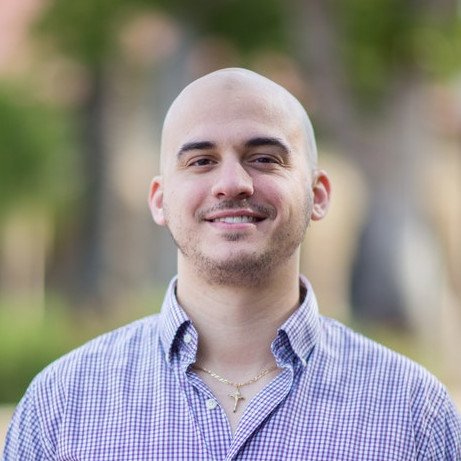
Gary Peters is the co-founder and CEO of PupPilot, a client communications platform for veterinary practices, and a co-founder of SpectrumCare. He studied applied mathematics and engineering at Vanderbilt University and earned a master's degree in AI at Carnegie Mellon University, with graduate research at NASA Ames Research Center. He founded two earlier companies through Stanford StartX; both were acquired. He has spoken at NAVC, the Veterinary Innovation Summit and Cornell's College of Veterinary Medicine. His team advises the AVMA on AI and collaborates on research with the University of Guelph.