AAHA Con 2026 · Session 3 of 4 · Portland, Oregon
The Compliance Gap: How AI Communication Can Improve Patient Outcomes
Listed in the AAHA Con program as "The On-Demand Client & the Compliance Gap."
About this session
Veterinary medicine has treatments that work and a stubborn gap in whether they're used as prescribed. In this AAHA Con 2026 session on veterinary client compliance, Gary Peters traces that gap from smallpox, which was eradicated by finding and reaching people rather than by a better vaccine, through two decades of adherence research, to heartworm, where a monthly preventive has existed since 1987 and most dogs still aren't on one. His argument is that the prompt, the reminder at the right moment, is part of the treatment, and that follow-through is where the medicine happens. The second half asks why practices don't send those prompts. Part of the answer is time. The larger part is that the practice-management systems most clinics run were built for billing and trigger reminders from the invoice, so the list of patients who need follow-up never existed. The session closes on what has changed: AI that can read the chart and then reach the client.
Key takeaways
- Adherence to long-term therapy averages about 50% in developed countries (WHO, 2003). Text reminders about doubled the odds of adherence across 16 randomized trials.
- Heartworm is the clearest veterinary case: a monthly preventive has existed since 1987, yet roughly two-thirds of dogs are on none, and the average buyer takes home 7.3 of 12 doses.
- AAHA's compliance research traced much of the gap to the practice itself, through recommendations not made and follow-through not done. Cost was rarely the reason.
- Reminder systems in most practice-management software are triggered by the invoice, so they can't see a declined test, a recommended recheck or an echo the client wanted to think about.
- Two things changed: AI can now operate software built for people, and language models read free-text veterinary records accurately. The follow-up list can finally be built from the chart.
Session guide
Smallpox: not with a better vaccine
Edward Jenner introduced the smallpox vaccine in 1796, and the disease was declared eradicated in 1980. The vaccine wasn't what was missing in between. In 1967 the World Health Organization intensified the effort and changed its strategy, putting surveillance and containment ahead of mass vaccination so that every case could be tracked down. Health workers in Bangladesh in 1975 went door to door and through the markets with picture cards, asking whether anyone had seen the rash, and Somalia recorded the last naturally occurring case in October 1977. The programme cost about $300 million and, in the WHO's words, saves the world well over $1 billion every year since 1980. The delivery was worth more than the medicine.
Behavior = motivation, ability and a prompt
Why reaching people worked, in the terms of BJ Fogg's behavior model: a behavior happens when motivation, ability and a prompt occur at the same moment. Nobody wanted smallpox, so motivation was never the issue. The vaccine supplied the ability. The campaign supplied the prompt, a person at the door when it mattered. The rest of the session uses the same three parts to ask what's missing in veterinary compliance.
The prompt is the best-tested part of the medicine
Human medicine has measured the gap for decades. The World Health Organization's 2003 report on long-term therapies estimated that adherence averages about 50% in developed countries, and C. Everett Koop's line, quoted in the New England Journal of Medicine's review, still sums it up: drugs don't work in patients who don't take them. The WHO report went further, arguing that improving adherence could do more for population health than improvements in specific treatments. The prompt is also the best-tested part. Pooling 16 randomized trials, a JAMA Internal Medicine meta-analysis found that text reminders about doubled patients' odds of adherence (odds ratio 2.11), lifting it from 50% to 67.8%. Across 17 trials and 25,101 patients on cardio-metabolic drugs, automated reminders raised the odds 1.89 times, and a Cochrane review of 75 studies in ten countries found reminder and recall raised immunization rates by 28%.
Heartworm: the cleanest case
Veterinary medicine has the same problem, and heartworm is its cleanest example. A monthly preventive has been available since ivermectin reached the canine market in 1987, for a disease the American Heartworm Society describes as "almost 100 percent preventable." Even so, the Society estimates that about two in three dogs get no preventive at all. In a study of 3.5 million dogs, buyers took home an average of 7.3 of the 12 monthly doses, and in another of about 202,000 dogs, roughly one in three had a full year's coverage. At least 1.1 million dogs in the United States are positive. The cost case is settled too. Comparing 235,188 dogs on year-round prevention with 2,425 treated for heartworm disease, researchers put prevention at about $182.90 a year against about $1,457 for treatment, and found a significantly higher mortality risk in treated dogs up to nine years old. Motivation and ability are both there. The prompt is missing.
Follow-through is the medicine
AAHA's first compliance study located much of the shortfall inside the practice itself: recommendations that weren't made, and follow-through that didn't happen. Cost was rarely the reason. Later numbers look similar. Of 407 practices Covetrus surveyed in 2017, 44% sent a single appointment reminder regardless of the result, and 66% made no attempt to recall patients they hadn't seen in 24 months. Gary's reframe: the diagnosis is made in the clinic, but whether the dose gets given and the recheck gets booked is settled at home, over the eleven months and twenty-nine days of the year when the practice isn't in the room. Clients, meanwhile, already get notifications from their pharmacy, their airline and their deliveries. They aren't demanding more from their veterinarian. They're expecting what everyone else already does.
Why it isn't happening: the end-of-day list
It's 5:40, the phones have gone quiet, and there's a list: the post-op check on Tuesday's Labrador, three overdue heartworm tests, the senior panel recommended in March, a callback from two o'clock. Gary puts the same clinic's inbound week next to it. Over five weekdays at one multi-doctor general practice, roughly 160 calls a day came in and roughly 55 a day went unanswered; by Friday the missed calls totaled about 280, or 35% of inbound calls, a figure published on PupPilot's verified statistics page. A practice that can't return the calls that came in won't start making the ones that didn't. And even with the time, there's a second problem: almost every practice has software that could technically send reminders, and most still don't have it set up to work from their client list.
Why the list never existed
Veterinary record software was designed for billing, not medicine. A 2020 paper in JAMIA Open from the Association for Veterinary Informatics and the CTSA One Health Alliance notes that most dog and cat records are stored as free text because most systems are "mainly designed for efficient charging and processing of transactions throughout a patient visit." Many of those systems are old. AVImark, sold since 1988, and IDEXX Cornerstone together account for nearly half the market, at 25.4% and 19.5% on Kynetec's figures in the Companion Animal Veterinary Software Guide, and ImproMed's first product shipped in 1979. In IDEXX's Finding the Time study, 85% of veterinary professionals said their software doesn't integrate well with their practice-management system, and Instinct Science's founder, the veterinarian Caleb Frankel, wrote in Today's Veterinary Business in August that "closed proprietary ecosystems have become the norm in our industry."
The consequence is that the only reminder such a system can send is one the invoice triggers, as the Cornerstone help pages describe. What the chart knows, the reminder system can't see: "Owner declined heartworm test — revisit next visit." "Recheck ears in two weeks." "Grade II murmur. Echo recommended; owner will think about it." Human medicine faced the same wall and was pushed past it. Stage 2 of Meaningful Use, the federal incentive program finalized in 2012 and in force from 2014, required providers to use the record to find patients due for preventive or follow-up reminders before they could collect incentive payments, and office-based physicians' use of electronic records rose from 42% in 2008 to 95%. Veterinary medicine had no mandate, incentive or standard. The compliance gap was never a discipline problem. It's an infrastructure problem.
What changed: AI that reads, then reaches
Two things changed at almost the same time. First, AI can now operate software built for people. OpenAI's GPT-6 Astra launch this year showed the model working inside Blender through its menus, tools and viewports, as a person would, and within days users had it turning old locomotive drawings into full 3D models. If it can operate Blender, it can operate the practice-management system through the same screens staff use, and get the data out. Second, language models read veterinary free text well. On 250 feline records, GPT-4o extracted clinical facts with 96.9% sensitivity against human review, and pulling a measured value from 4,415 practice narratives in the SAVSNET database, a language model found every instance (100% recall), against 72.6% for the older pattern-matching method.
The reading is coming from outside the systems of record. In the past year, 31% of practices adopted or changed an AI medical-record tool, 11% a cloud practice-management system and 2% an on-premise one (Instinct Science). The new path reads invoices, notes, lab results and messages; builds the list of what's due, declined or lapsed; reaches the client by call, text or email; and routes the reply to a person. Not AI that talks: AI that reads, then reaches. That reading is what PupPilot's medical intelligence does.
The medicine was never the bottleneck
Gary closes where the smallpox story began. The medicine was never the bottleneck. Reaching people was, and for the first time, reaching them can be part of the practice.
Questions and discussion
Four questions for practice teams: how many follow-ups the practice intended to make last week, and how many happened; how compliance is measured, and whether the number tracked is doses given or reminders sent; what's in the charts right now that the reminder system can't see; and what the practice would send if the list existed tomorrow.
Figures cited in this session
| Figure | Source |
|---|---|
| Smallpox vaccine introduced 1796; eradication declared 1980; last naturally occurring case October 1977, Somalia | WHO; CDC |
| Eradication cost about $300 million; saves well over $1 billion a year since 1980 | WHO, May 8, 2020 |
| Adherence to long-term therapy averages about 50% in developed countries | WHO, Adherence to Long-Term Therapies, 2003 |
| Text-message reminders: odds ratio 2.11; 16 randomized trials; adherence 50% to 67.8% | Thakkar et al., JAMA Internal Medicine, 2016 |
| Automated reminders for cardio-metabolic medication: odds ratio 1.89; 17 trials; 25,101 patients | Kassavou & Sutton, Health Psychology Review, 2018 |
| Reminder and recall raised immunization rates 28%; 75 studies in ten countries | Jacobson Vann et al., Cochrane, 2018 |
| Monthly heartworm preventive available since 1987 | Noack et al., 2021 |
| Roughly two-thirds of dogs on no heartworm preventive | American Heartworm Society estimate, via dvm360, 2018 |
| Average buyer takes home 7.3 of 12 monthly doses (3.5 million dogs) | Mwacalimba et al., Parasites & Vectors, 2023 |
| About one in three dogs had a full year's coverage (about 202,000 dogs) | Lavan et al., Parasites & Vectors, 2018 |
| At least 1.1 million US dogs heartworm-positive | AVMA News, April 27, 2026 |
| Prevention about $182.90 a year, treatment about $1,457; higher mortality risk in treated dogs up to nine years old | Mwacalimba et al., Parasites & Vectors, 2026 |
| 44% of practices send only one appointment reminder; 66% don't recall patients unseen for 24 months (n=407) | Covetrus, 2017 |
| One multi-doctor general practice over five weekdays: about 160 calls a day, about 55 missed; about 280 unanswered by week's end, 35% of inbound calls | PupPilot missed-call analysis; verified statistics |
| Market share: AVImark 25.4%, Cornerstone 19.5% | Kynetec, via the Companion Animal Veterinary Software Guide |
| 85% say their software doesn't integrate well with their practice-management system (n=786) | IDEXX, Finding the Time, 2023 |
| Office-based physicians on electronic records: 42% in 2008, 95% later | ONC data brief |
| GPT-4o extraction from 250 feline records: 96.9% sensitivity, 97.6% specificity | Wulcan et al., Frontiers in Veterinary Science, 2024 |
| Recall on 4,415 practice narratives: language model 100%, pattern matching 72.6% | Fins et al., Veterinary Record, 2024 |
| Adopted or changed in the past year: AI medical-record tool 31%, cloud PIMS 11%, on-premise PIMS 2% | Instinct Science, 2026 (n=763) |
The 5:40 list and the chart lines are illustrations.
Slides and handout
Companion reading
- The on-demand client: How AI can help meet expectations, AAHA Trends, September 10, 2026
More from AAHA Con 2026

Beyond the Scribe
What comes after AI scribing, and why the gains arrive when the clinic changes shape.

AI-Powered Triage & Client Communication
What after-hours calls actually contain, and what AI phone triage should decide.

The Front Desk of the Future Is Not a Desk
The switchboard, the bank teller and the barcode, and what they mean for the front desk.
Related on puppilot.co
- Outbound follow-up
- Medical intelligence
- Practice-management integrations, including AVImark, Cornerstone and ImproMed
- Compare practice-management systems
- Verified veterinary statistics
- Elsewhere: SpectrumCare's guide to heartworm disease in dogs; The Herd on the shift in parasite-prevention messaging
About the speaker
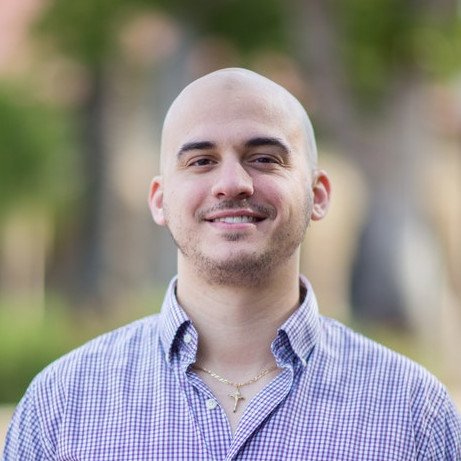
Gary Peters is the co-founder and CEO of PupPilot, a client communications platform for veterinary practices, and a co-founder of SpectrumCare. He studied applied mathematics and engineering at Vanderbilt University and earned a master's degree in AI at Carnegie Mellon University, with graduate research at NASA Ames Research Center. He founded two earlier companies through Stanford StartX; both were acquired. He has spoken at NAVC, the Veterinary Innovation Summit and Cornell's College of Veterinary Medicine. His team advises the AVMA on AI and collaborates on research with the University of Guelph.