AAHA Con 2026 · Session 1 of 4 · Portland, Oregon
Beyond the Scribe: How AI Is Transforming the Vet Clinic of the Future
About this session
AI scribing has spread through veterinary general practice faster than any other new technology, and it has given veterinarians real time back. In this AAHA Con 2026 session on AI in veterinary medicine, Gary Peters treats scribing as the first step in a longer change. He starts with factory electrification, when plants that hung electric motors on their old line shafts saw almost no gain for twenty years, to separate tools that speed up the existing workflow from changes that redraw it. He then lays out what a redrawn veterinary front office looks like: one router that reads every channel and finishes routine requests, outreach that knows each patient's record, and a rule, grounded over generated, that keeps the medical plan with the veterinarian. The session closes with where the profession stands today, on the evidence of this year's industry surveys, and what that suggests about the future of veterinary medicine.
Key takeaways
- Scribing leads AI adoption in general practice: 31% of practices adopted or changed an AI scribing tool in the past year, more than any other technology (Instinct Science, 2026).
- A new technology is first used to do the old job faster in the old layout. US manufacturing productivity grew 0.3% a year in 1909–1919 and 5.3% a year in 1919–1929, as factories were rebuilt around electric motors.
- Roughly 80% of after-hours calls to general practices are administrative (PupPilot, Q4 2025). Those can be finished without a person, and the rest can reach a person who's already briefed.
- A redrawn front office has two functions: a router across calls, texts, email, fax and web forms that finishes routine requests, and outreach that knows the record and reaches the whole panel.
- About a third of practices use AI for scribing or the medical record, about 5% use it for appointments, reminders and follow-ups, and 85% say the software they've added doesn't integrate well with their practice-management system.
Session guide
The motor where the steam engine stood
In 1899, electric motors supplied less than 5% of the mechanical drive in American factories. By 1924 they supplied about two-thirds (Paul David's tabulation of DuBoff's data). Most factories first installed a motor where the steam engine had been and kept the ceiling shafts, the belts and the machine layout, the transition Warren Devine traced in "From Shafts to Wires". Productivity growth stayed slow until plants were redesigned, with machines grouped by operation, a motor on each, and single-storey buildings laid out to follow the work. Ford's moving assembly line cut the time to build a Model T chassis from 12½ hours to 93 minutes. The chapter ends on the idea the rest of the session builds on: the first use of a new technology is the old job, done faster, in the old layout.
Scribing is adding motors
Scribing has been the profession's motor. In Instinct Science's 2026 survey of 763 veterinary professionals, 31% of practices adopted or changed an AI scribing tool in the past year, ahead of client communication tools at 25%. Inside practices that use AI, the leading uses are medical records and SOAP notes (63%), diagnostic interpretation (38%) and summarizing patient records (33%): the doctor's existing work, done faster. Chatbots for appointments, reminders and follow-ups, a use that changes the layout, sit at 11%. Asked what they hope AI will do, veterinary professionals name productivity and time (60.6%) and less administrative work (56.1%) in Gabor and colleagues' survey of 3,968. Gary's point is that these are the right hopes and scribing was the right first move, but a faster note leaves the exam, the workflow and the front office as they were. For what a scribed record should contain, see the SOAP documentation guide PupPilot published with the University of Guelph.
Redoing the floor plan: one router for every channel
What a front office looks like when it's drawn around AI rather than around the phone. The AI answers first, identifies the client and patient from the practice-management record, and decides where each request goes. Routine work is finished on the spot, and anything that needs judgment goes to a person with the chart open and the reason on screen. The chapter grounds this in PupPilot's Q4 2025 after-hours report, in which roughly 80% of calls to general practices were administrative. It then widens from the phone to every channel. Today one request can arrive as a voicemail, a text, an email and a web form, each in a different place, and it falls to staff to notice they're the same request. An illustrative inbox shows a morning with four clients: three threads finish on their own, and the team starts the day with the one sick dog. It's a different design from a website chatbot: one communications platform reading every channel.
A new era of outreach
The router covers the requests that come in. Outreach covers the ones that never do. The last generation of reminders sent the same message to every client ("Max is due for his annual"), whether or not it worked. The outreach Gary describes picks a call, a text, an email or a letter for each client, knows the pets, medications, diagnoses and past recommendations, and asks something specific: "Bella is three months into her Apoquel — how is the itching?" Replies that raise a concern go to a person. The chapter sets the two halves of the new floor plan side by side: routing for the calls that came in, and follow-up that knows the patient for the calls that never came.
Grounded over generated
The principle clinicians ask about first. The system shouldn't generate a medical plan. It should find the one the care team already wrote, explain it in plain terms whenever the client asks, and carry it out. When a client calls after hours about a post-operative patient, the answer comes from the discharge instructions in the record, not from the model, and the medical decision stays with the veterinarian. That makes integration with the practice-management system the deciding factor. Grounding depends on access: the system has to read the record to work from it, and write back to it so the team isn't re-entering what happened. PupPilot calls this approach medical intelligence.
We are in 1900
Where the profession stands, in three numbers. About a third of practices use AI for scribing or the medical record, according to Instinct Science: the motors are arriving. About 5% use AI at the front door for appointments, reminders and follow-ups (48% of practices use AI in some form, and 11% of those use it that way), close to electricity's share of factory power in 1899. And 85% of the veterinary professionals in IDEXX's Finding the Time study said the software they've added doesn't integrate well with their practice-management system: the shafts and belts are still up. Gary closes on the difference between the two changes. Scribing changed what a veterinarian's day feels like. Redrawing the front office changes what the clinic can do.
Questions and discussion
Three questions for practice teams: what the clinic's layout looks like today, in the terms of the factory story; which area would be most useful for AI to handle end to end (for most teams, scheduling); and what more proactive outreach would look like.
Figures cited in this session
| Figure | Source |
|---|---|
| Electric motors' share of mechanical drive in US manufacturing: 4.8% in 1899, 67.1% in 1924 | Paul David, "Computer and Dynamo," 1989, Table 3, from DuBoff (1979) |
| Total factor productivity growth in US manufacturing: 0.3% a year in 1909–1919, 5.3% a year in 1919–1929 | Same paper, Table 2, from Kendrick (NBER, 1961) |
| Model T chassis assembly: 12½ hours before the moving line, 93 minutes after | Library of Congress |
| Adopted or changed in the past year: AI scribing 31%, client communication tools 25% | Instinct Science, The State of General Practice Veterinary Care, 2026 (n=763) |
| Among practices using AI: medical records and SOAP 63%, diagnostic interpretation 38%, summarizing records 33%, chatbots for appointments, reminders and follow-ups 11% | |
| How practices would like to use AI: SOAP creation 51%, summarizing records 46%, diagnostic assistance 44%, inventory 41%, administrative tasks 29%, chatbots 24% | |
| AI's promise: productivity and time 60.6%, reducing administrative workload 56.1% | Gabor et al., American Journal of Veterinary Research, 2025 (n=3,968) |
| Roughly 80% of after-hours calls to general practices are administrative | PupPilot, After-Hours Insights Report, Q4 2025 |
| About a third of practices use AI for scribing or medical records; 48% use AI in some form | Instinct Science, 2026 |
| About 5% use AI for appointments, reminders and follow-ups | Derived: 48% × 11%, Instinct Science, 2026 |
| 85% say added software doesn't integrate well with their practice-management system | IDEXX, Finding the Time, 2023 (n=786) |
The omnichannel inbox and the outreach messages in this session are illustrations.
Slides and handout
More from AAHA Con 2026
AI-Powered Triage & Client Communication
What after-hours calls actually contain, and what AI phone triage should decide.
The Compliance Gap
Why follow-through is the medicine, and why the reminder list never existed.
The Front Desk of the Future Is Not a Desk
The switchboard, the bank teller and the barcode, and what they mean for the front desk.
Related on puppilot.co
- Client communications platform: calls, texts, email and fax in one place
- Outbound follow-up
- Medical intelligence
- Practice-management integrations
- From Systems of Record to Context-Aware Agents, Gary's Cornell symposium talk
- SOAP scribe documentation guide, with the University of Guelph
- Verified veterinary statistics
- Elsewhere: The Herd on AI scribe adoption in veterinary medicine
About the speaker
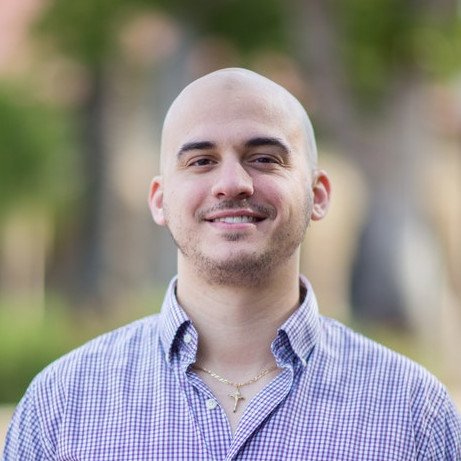
Gary Peters is the co-founder and CEO of PupPilot, a client communications platform for veterinary practices, and a co-founder of SpectrumCare. He studied applied mathematics and engineering at Vanderbilt University and earned a master's degree in AI at Carnegie Mellon University, with graduate research at NASA Ames Research Center. He founded two earlier companies through Stanford StartX; both were acquired. He has spoken at NAVC, the Veterinary Innovation Summit and Cornell's College of Veterinary Medicine. His team advises the AVMA on AI and collaborates on research with the University of Guelph.