AAHA Con 2026 · Session 2 of 4 · Portland, Oregon
AI-Powered Triage & Client Communication: What Every Vet Should Know
About this session
When a practice considers an AI phone system, the first questions are medical: what if it misses a bloat, what if it tells someone to wait. In this AAHA Con 2026 session, Gary Peters argues that those instincts are right and aimed at the wrong problem, because most calls aren't medical. He starts with Baltimore, which built the country's first 311 line in 1996 after finding that most 911 calls weren't emergencies, then looks at what after-hours calls to general practices contain. From there he defines veterinary triage in its original sense, sorting, and sets out what AI phone triage should decide for every call: book it, send it, answer it, route it for approval, pass it to a person, or send it to emergency care. The rest of the session covers what it takes to finish a routine call rather than pass it along, the texts a caller can receive during the call, and the results at one multi-doctor practice.
Key takeaways
- Roughly 80% of after-hours calls to general practices are administrative. General questions (42%) and scheduling (25%) alone make up two-thirds, and roughly one in eight involves an emergency or urgent concern (PupPilot, Q4 2025).
- Triage comes from the French trier, to sort. AI phone triage decides where each call goes. It doesn't make medical decisions.
- Anything medical goes to a person on the team, with the chart open. After hours, it goes wherever the practice has chosen: an on-call veterinarian, an emergency hospital or a veterinarian-staffed teletriage service.
- The test for an AI phone system is whether it can sort every call and finish the administrative ones. For scheduling, finished means booked in the calendar with the right type, provider and duration, not a message asking someone to book.
- Texts sent during the call scale with what the practice makes available: about 1% of calls include one when five links are configured, and 20% when a hundred or more are.
Session guide
Baltimore builds a second number
Baltimore's police took 1.8 million 911 calls in 1995, and the city estimated that about 60% weren't emergencies. Instead of adding emergency staff, it opened a second number, 311, in October 1996, for calls that needed the police but not an emergency response. The police department's first-year figures, as the New York Times reported them, showed 911 calls down 24.8%, the average wait for a 911 answer cut from six seconds to two, and busy signals down 78.5%. An independent evaluation measured a 34% fall in 911 volume, and by February 1997 the FCC had set 311 aside nationwide for non-emergency police calls. The emergencies were the same as before. They no longer shared a line with everything else.
Evaluated medically, used operationally
The chapter opens with the questions practices ask first about an AI voice tool. What if it misses a bloat? What if it tells someone to wait? How do I know it won't get something wrong? Gary treats them as sound instincts aimed at the wrong problem: practices evaluate these systems medically and use them operationally. So he looks at the calls. In PupPilot's After-Hours Insights Report for Q4 2025, general questions were 42% of after-hours calls to general practices and scheduling was 25%. With the smaller administrative categories added, such as new-client registration, paperwork and billing, roughly 80% of calls were administrative. Roughly one call in eight involved an emergency or urgent concern.
Triage is the right word
The word comes from the French trier, to sort. Medical triage is generally credited to Dominique-Jean Larrey, Napoleon's chief surgeon, who had the wounded treated by need, not by rank and not in the order they arrived. On a practice's phone line, sorting mostly means recognizing that a call belongs with the front desk, and that anything medical belongs with the medical team. Gary sets out the six places an inbound call can go: booked into the calendar; sent a record, form, price or link; answered from the treatment plan or the website; routed for a doctor's approval; passed to a person with the chart open; or sent to emergency care with a structured handoff. The AI isn't medically triaging on the phone. Medical calls route themselves to a person, and after hours to wherever the practice has designated, such as an on-call veterinarian, an emergency hospital or a veterinarian-staffed service working as teletriage, the human safety layer.
The question to ask a vendor
The evaluation comes down to one question. Not "Can it answer medical questions?" but "Can it sort every call, and finish the admin ones?" A system that answers every call but can't complete a booking or send a form has only moved the work into a message queue.
From sorting calls to finishing them
A sorted call isn't a finished one. If the system sorts calls and hands the desk a to-do list, the work has moved, not gone. Gary uses scheduling, a quarter of after-hours calls, to define finished: the booking lands in the calendar instead of in a message asking someone to book; it has the right appointment type, provider and length; it respects blocked times and provider rules; a new client gets a record and intake forms; and the confirmation text arrives before the caller hangs up. In PupPilot's case study of a three-doctor general practice, 95% of after-hours scheduling calls arrived with all the needed information already collected. Requests that need a veterinarian's sign-off work the same way: logged against the record, queued for approval, and the client told what happens next and when.
The texts you send during the call
Some calls end well because the caller has what they wanted before hanging up. While the call is still going, the AI can text a link: the intake form, a payment link, directions and hours, a records request, discharge instructions again, or the page on the practice's website that answers the question. How often that happens depends on how much the practice has made available. Across a selection of practices, about 1% of calls get a mid-call text that answers the request when five links are configured, and 20% do with a hundred or more. At 100 calls a day, Gary estimates, that removes roughly 16 hours a week of front-desk follow-up. Urgent items are still flagged to the team.
What that looks like at one practice
One multi-doctor general practice handles about 15,000 calls a month. Before the change, around a thousand calls a week went unanswered, and on a normal day nobody had time to call them back. Now every call is answered, and routine ones are completed while the caller is still on the line. In Gary's words, "The desk didn't get faster at the phones. It got its afternoons back." The team now spends that time on outreach.
A solution, right away
Most calls don't need a live person. They need an answer, an appointment or the right next step, right away. When routine calls are resolved, the team is free for the calls that need a person. Baltimore's 911 line answered in two seconds once 311 existed.
Questions and discussion
Three questions for practice teams: what the practice's call mix looks like, and whether anyone has measured it; where the front desk loses the most time today; and what the team would do with the hours back if a fifth of calls were answered with a text on the line.
Figures cited in this session
| Figure | Source |
|---|---|
| 1.8 million 911 calls in Baltimore in 1995; about 60% estimated not emergencies | Baltimore Sun, October 3, 1996 |
| First year of 311: 911 calls down 24.8%; average answer time six seconds to two; busy signals down 78.5% | New York Times, October 2, 1997, reprinted in the Congressional Record |
| 911 volume down 34% in the independent evaluation | Mazerolle et al., Criminology & Public Policy, 2002 |
| 311 reserved nationally, February 1997 | FCC 97-51 |
| After-hours calls to general practices: general questions 42%, scheduling 25%, roughly 80% administrative, about one in eight emergency or urgent | PupPilot, After-Hours Insights Report, Q4 2025 |
| At one three-doctor general practice, 95% of after-hours scheduling calls arrived with all the needed information already collected | PupPilot case study |
| Calls that include a mid-call text answering the request: about 1% with 5 links configured, 20% with 100 or more | PupPilot data, a selection of practices |
| About 16 hours a week of front-desk follow-up avoided on 100 calls a day | PupPilot estimate from the 20% rate |
| One multi-doctor practice: about 15,000 calls a month; about 1,000 a week unanswered before the change | PupPilot client data |
Slides and handout
More from AAHA Con 2026
Beyond the Scribe
What comes after AI scribing, and why the gains arrive when the clinic changes shape.
The Compliance Gap
Why follow-through is the medicine, and why the reminder list never existed.
The Front Desk of the Future Is Not a Desk
The switchboard, the bank teller and the barcode, and what they mean for the front desk.
Related on puppilot.co
About the speaker
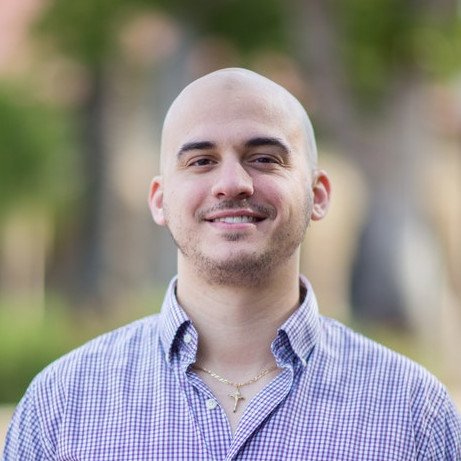
Gary Peters is the co-founder and CEO of PupPilot, a client communications platform for veterinary practices, and a co-founder of SpectrumCare. He studied applied mathematics and engineering at Vanderbilt University and earned a master's degree in AI at Carnegie Mellon University, with graduate research at NASA Ames Research Center. He founded two earlier companies through Stanford StartX; both were acquired. He has spoken at NAVC, the Veterinary Innovation Summit and Cornell's College of Veterinary Medicine. His team advises the AVMA on AI and collaborates on research with the University of Guelph.